Runde provides professional DFM (Design for Manufacturability) analysis and new product development consultation for plastic injection molded parts. Before mold fabrication, our experienced mold engineers review your 3D data to identify potential manufacturing risks.
Our engineers carry out comprehensive manufacturability inspection on your plastic part design to eliminate hidden risks ahead of mold making.
Verify sufficient draft angles; detect unreasonable undercuts that cause complicated side actions or demolding failure.
Evaluate thickness uniformity to avoid sink marks, voids, warpage and inconsistent filling during injection.
Optimize ribs, mounting bosses and snap joints for sufficient strength while reducing molding defects.
Forecast potential weld lines, air traps, warpage and cosmetic defects related to gate layout.
Review dimensional tolerances; suggest reasonable standards balanced between function and mold cost.
Assess texture, gloss and appearance requirements; provide professional plastic material selection advice.
After the DFM review, you will receive a structured report with clear risk levels, design comments and actionable optimization suggestions.
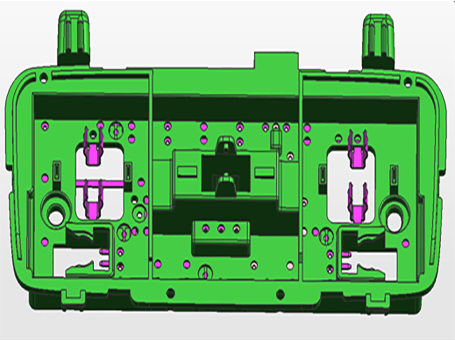
Marked-up drawings highlight critical design issues such as insufficient draft, undercuts, wall thickness variations and sharp corners.
You receive a clear PDF report organized by inspection item, risk level, problem description and recommended improvement.
Each issue is labeled as Critical, Medium or Low, so your team can prioritize design changes before mold manufacturing begins.
We do not only point out problems. Where necessary, we provide alternative design proposals to improve moldability and reduce tooling risk.
DFM Report (PDF)
Formal manufacturability review document for internal approval.
Marked Drawings
Visual annotations help your engineering team quickly locate risks.
Actionable Comments
Each suggestion is linked to moldability, quality or cost impact.
Preliminary Timeline Reference
Optional early feedback on prototype, mold and production scheduling.
A completed DFM report helps reduce unnecessary mold revisions, shorten development cycles and stabilize later production quality.